
Whether you’re doing it alone, with your husband, or supported by your family members… narrowing down a newborn essentials checklist can be quite tricky. In this blog, I am sharing my personal experience of how we prepared to welcome our baby in January this year.
As a first-time mom, I find it super overwhelming to have a newborn essentials checklist.
When I became a mom in January this year, I was confused about what to buy and what not to buy.
I felt lost trying to decide what my baby really needed. It was hard to tell what was worth the money.
Every next blog or every next reel on my feed was claiming to make my life easier. But, in reality, most are just marketing tricks.
As the due date came closer, my husband and I decided that we’re going to stick to the basics, i.e., only extremely essential items. There will be no hoarding or splurging.
Now I have made this newborn essentials checklist for you. It’s here to help you sort through the chaos. I want you to feel confident and prepared for your baby’s arrival without spending (read: wasting) too much.
By sticking to these basics, you will not only save money but also shop mindfully and spend on what really matters.
Together, we’ll cut through the noise, as this newborn essentials checklist will help you focus on the joy of your new baby without getting whirled in unnecessary chaos. Let’s get you ready for this beautiful journey.
What Your Newborn Actually Needs in the First 12 Weeks
Knowing what your baby needs in the first three months is the key to a smoother start. This time, often called the fourth trimester, is when your newborn adjusts to life outside the womb.
And trust me when I say this: simplicity is your best friend in these early days. You would not want to complicate your situation by adding any unnecessary gadgets or decor to your to-do list.
Your baby doesn’t need them to feel safe. All they need is you, your love, and your care.
They seek three basic things in this initial period: consistent warmth, frequent feedings, and regular diaper changes. Meeting these needs is crucial for their growth.
By focusing on these core needs, you can avoid spending too much on needless items and save wisely for things that support your recovery and your baby’s growth.
In today’s world, it’s quite easy to get carried away and hoard extra items in the excitement of your baby’s arrival. But if you think sensibly, if you let the internet noise go unheard, you can save your sanity and your money by sticking to the basics.
When you ignore the marketing, you see your baby just needs you and a few key items.
Remember, your well-being is as important as your baby’s. Simplifying your shopping list at this time also reduces your postpartum stress. This lets you spend more time bonding with your newborn during these special yet fragile weeks.
The Ultimate Newborn Essentials Checklist
As I entered the 9th month of my pregnancy and was about to start my parenting journey, I quickly learned that a list was key. Otherwise, my mind and these newborn items would just be all over the place.
Keeping track of what your baby needs can be overwhelming. But breaking it down into categories makes it easier; that’s what I did. This newborn essentials checklist helps you to focus on what’s most important for your baby’s first months.
1. Clothing Essentials for Comfort
A newborn baby’s skin is very delicate. So, choosing the right fabrics is quite crucial. Hence, I chose to stick to soft, breathable cotton that’s easy to wash and wear. Now, because my baby was born in peak winter, we had to get warm clothing for the initial 12 weeks.
These included:
- 7-10 Warm and fuzzy pajama sets,
- 3-5 Full clothing sets that came with caps, socks, and mittens,
- Quilted swaddles for making our baby feel secure and sleep well.
2. Diapering and Hygiene Must-Haves
You’ll go through many diapers in the first weeks. Having your diaper essentials ready in a dedicated spot will especially help you during the late-night changes. I kept all of them at bedside for convenient and quick changes.
Now, frequent diaper changes can cause rashes on the newborn’s skin. Thus, I only used the diapers at night.
During the day, we used to keep our baby in cloth nappies. To prevent irritation, remember to use a gentle barrier cream. My mother-in-law used to bathe my baby, and she always used a soft washcloth and plain, warm water for a calm experience.
To date, my baby enjoys his bathing time and sleeps peacefully after it.
3. Sleep Safety and Bedding Basics
Creating a safe sleep environment is important for a newborn. So, make sure your baby sleeps on a firm, flat surface without loose blankets or pillows, as that can easily suffocate the baby.
Though many mothers prefer to introduce a crib from early on, I chose to cosleep with my baby, and we have been going strong since then.
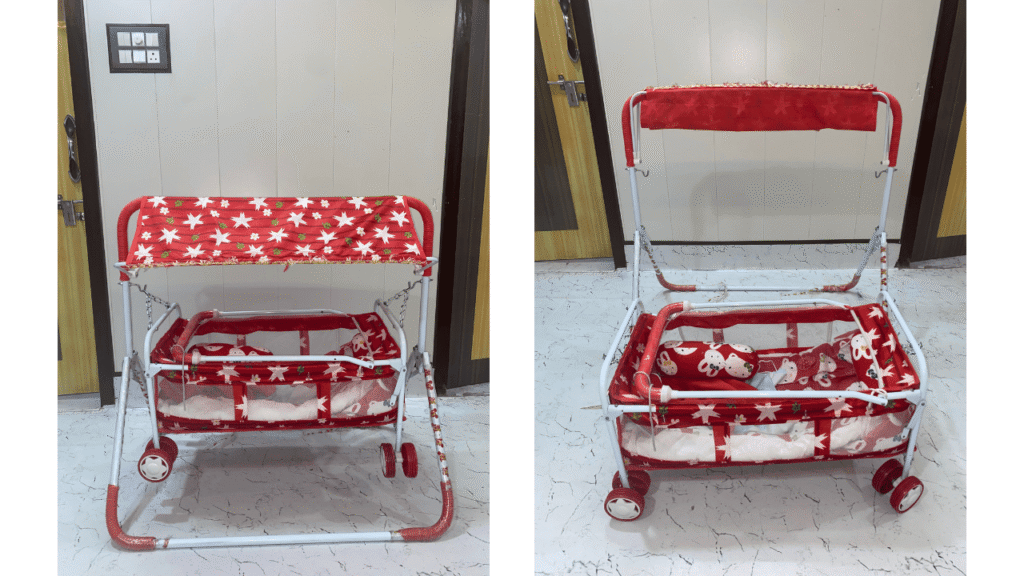
We sleep together at night. During the day, while I work, my baby stays in his swinging crib.
However, if you’re going for a crib for night sleeping too, keep it simple with just a fitted sheet. It keeps the sleeping area clean and comfy for your newborn.
Newborn Essentials Checklist: Where to Save and Where to Splurge?
Smart parenting means knowing when to spend and when to save. Managing money for a new baby can be tough. But having a strategic approach really takes out all the guesswork and makes it easy for new parents.
You don’t always need the most expensive things to keep your baby safe and happy; sometimes simple products and DIYs go a long way too.
My baby is 6 months old, and I think leaving him in a car seat is too much of a risk that I am not going to take. We have barely travelled 4-5 times by now, so we have not invested in it yet.
More than these products, I trust myself to protect my baby when he is most vulnerable.
But if you’re confident about it, you can invest in safety-first gear like car seats and crib mattresses.
You can also save on things your baby will grow out of fast. As newborns grow quickly, we didn’t splurge on fancy clothes and big nursery decor, as they don’t last long.
Instead, we went with budget-friendly alternatives like using his elder cousins new born clothes and toys for the initial 12-15 weeks. This really helped us save money and spend on what really matters, i.e., monthly immunity-boosting shots for our baby and taking care of other medical expenses that followed post-birth.
Remember, as a parent, you can create a safe space for your baby without breaking the bank. Focusing your spending on quality and safety is key. Your baby won’t remember their onesie brand, but they’ll be safe thanks to your choices.
Navigating the Indian Market: Considerations for Parents
Shopping for baby essentials in India can be rewarding if you know what to look for. The market offers a mix of traditional and modern products. Also, now with influencer marketing on Instagram, baby products and motherhood have become a whole segment for both buyers and sellers.
But you don’t have to get lost in the cuddle-filled glitz of the motherhood phase, as projected by many brands. Instead, it’s important to think about how your baby’s environment affects their needs and then shop accordingly.
The local climate is a key factor. India’s weather varies greatly, from humid coasts to dry plains. Choose breathable, natural fabrics like cotton for your baby’s comfort and to prevent skin issues in warm weather.
The Indian market offers both international and local brands. Thus, it’s only smart to compare your options for durability and maintenance. There are many local brands or even street shops that offer features that even international brands can lack sometimes.
Irrespective of what you choose, safety is crucial, no matter the brand. So, always check for recognized safety certifications in the region. This ensures products like strollers and cribs meet high standards and are perfect for long-term use.
Also, think about your cultural preferences and family traditions. Even though modern marketing tactics may blur the vision towards rituals, combining modern convenience with traditional care is the best approach. I say this with personal experience; by staying informed, you can confidently find what your family needs.
Online Shopping Versus Local Stores: Finding the Best Deals
Choosing between online stores and local shops can be time-consuming, but it is a balancing act. Each option has its own benefits. They help you save money and time when getting ready for your baby.
Online shopping is great for busy parents. You can look at many items, read reviews, and compare prices easily. It’s perfect for buying diapers, wipes, and clothes without leaving home.
But local stores, on the other hand, offer a real experience you can’t find online. Visiting a shop is quite important if you are planning to invest in big items like strollers or car seats. You can check the quality and feel of the products, giving you confidence in your choice.
Many parents mix both online and local shopping, just as we did. My husband tested products in stores, and then I found deals online. This way, we got what we needed while staying within our budget. You can try the same.
So choose the method that suits you the best. There’s no one right way to shop for your newborn. Weighing convenience against the satisfaction of seeing products in person is key. This way, you make the best choices for your baby.
Newborn Essentials Checklist: Hospital-to-Home Items
Creating a clear timeline for going home from the hospital was a game-changer for me. It helped me focus on recovery and bonding without worrying about supplies.
Just as I entered the 9th month of my pregnancy, we knew it was best to prepare for the baby’s arrival in advance, especially in reference to my postpartum recovery.
With the support of my in-laws, we organised our preparation into steps that helped in creating a baby-friendly and recovery-inducing ambience at home, turning it into a peaceful sanctuary both for me and my baby.
I was due in the second week of February. But everyone around me was certain that the baby could arrive any day once I touched my 9th month.
The very first thing we did was sort out my postpartum wardrobe and shift all my partywear and other clothing items into a different cupboard.
Next, we emptied the most accessible cupboard to store baby’s washed clothes, linens, swaddle clothes, and other necessary items like diapers, feeding bottles, etc. This way, they were all ready to use right away.
As my due date got closer, we focused on getting our home ready. Having a well-packed hospital bag is important, but so is a ready home.
It was past midnight, around 2 am when I went to the washroom that night. What I thought was a normal call just like any other night gradually led to my water bag bursting and severe labor pain.
My husband and mother-in-law rushed me to the nearby hospital. I have been preparing for this day for the past 9 months, both physically and mentally.
So, it just took me 40 minutes in the labour room. 3 strong pushes and my baby was with me. I have shared my whole childbirth story in this blog.
Now back to the point, here are some key tasks my family took care of while I was admitted to the hospital for the next 2 days:
- Moved the double bed into the veranda and installed 3 single beds in our room to smooth the postpartum recovery. A bed for me and my baby, a bed for my husband, and a bed for my mother-in-law, who was my main caretaker at that time.
- Prepared all the nutritious ladoos and other eatables that I was supposed to eat during the postpartum period to heal internally and bear the painful bleeding.
- Prepared a postpartum recovery kit with items I had ordered a month ago.
- Sanitized the entire room to make me feel more relaxed upon my return and obviously from the perspective of our baby’s hygiene too.
After I got home, my husband made sure that I was devoid of any kind of stress and got complete rest. We had all my go-to essentials at my bedside for late-night feedings. This helped me to avoid getting up and down and allowed me to focus on my baby.
Remember, this timeline is to help you enjoy these first moments without stress. Nothing else matters during this time, so mommy, make sure you let everything else wait and give all your love and care to your baby and concentrate on your healing alongside.
Breastfeeding Must-Haves and What You Can Skip
When I began breastfeeding, I learned not every gadget is needed. The market has many products, but you need to stick to the feeding essentials to save time and money. My aim is to help you ignore the unnecessary so you can bond with your baby.
Comfort is key during long nursing sessions. A good nursing pillow changes your posture and your baby’s position. Also, loose and soft clothes are crucial for leak management.
As new parents, you may feel pressured to buy every new gadget online. But you can skip items like expensive bottle warmers or fancy nursing clothes. Instead, invest in reliable feeding essentials that actually help.
“Breastfeeding is a natural process, but it is also a learned skill that takes patience, practice, and the right support system.”
It took me more than a month to learn it and practice with my baby. For the first 35-40 days, my baby was on a hybrid feed. Because he was not latching properly, I had no other option but to pump my milk and feed him with a bottle. Alongside, we also had to begin formula feeding to keep him full.
But as I visited a pediatrician, the nurses taught me the proper techniques on how to latch my baby. It took me a good 8-10 days of repeated practice, and finally my baby started to latch in the right way.
My baby was born in January. I shifted him to complete breastfeeding in mid-March, and since then we have been going strong without any issues (*touchwood*).
The truth is your breastfeeding needs will change as your baby grows. So, start with the basics and add more feeding essentials as needed. Trust your instincts to know what’s best for you and your baby.
Items You Can Safely Skip to Save Space and Money
I quickly learned that my nursery was becoming a storage unit for items I never touched. The excitement of preparing for a baby can lead you to buy too much. Many “feeding essentials” are not needed for a newborn. Many items I bought just sit in my cupboard licking dust now.
By avoiding these impulse buys, you can keep your home clutter-free and save money too.
Many gadgets are designed to solve problems that most parents never actually encounter. Fancy bottle warmers or specialized wipe warmers often take up valuable counter space without providing a real benefit. I was this close to buying a bottle warmer, but my husband denied and I thank god for it now.
You can easily warm a bottle in a bowl of warm water. And your baby will likely be perfectly happy with room-temperature wipes; mine surely was.
When you focus on the basics, you realize that simplicity is your best friend. A fancy hands-free breast pump was one of my most impulsive newborn essential buys, and I kind of regret it today because I only used it twice or thrice, and then, since my baby started latching properly, I haven’t used it ever since.
Skipping unnecessary nursery gadgets can allow you to invest in higher-quality gear that will last longer. So, always evaluate whether a product serves a genuine purpose or if it is just a clever marketing gimmick.
Conclusion
Starting your journey as a parent is more than just buying the latest baby products. Your love and presence are the most valuable things you can give your baby. While those Instagram-worthy brands can be helpful, your intuition is your best guide.
Choosing what your family really needs can help you avoid feeling overwhelmed. I hope my newborn essentials checklist will help you to focus on what really matters.
I hope you create a peaceful home by choosing quality over quantity. I hope each item you invest in makes your daily life easier and more enjoyable.
I invite you to share your experiences with the newborn essentials you found useful. Your stories can help other parents feel more confident in their choices.
Join our community to talk about your favorite products or ask for advice. Your path is unique, and I’m here to support you.
FAQ
1. What are the absolute clothing essentials I need to buy before my baby arrives?
Since I had a winter baby, we invested in 5-7 warm and fuzzy clothing sets with soft mittens and gloves. We also got a few cotton pieces for layering under the warm sets. These clothing essentials keep your newborn warm and prevent face scratches.
2. Which feeding essentials are actually necessary if I plan to breastfeed?
All you need is the right pillow to begin with. Other than that, your breasts will take care of it all. Trust me when I say this: simple feeding essentials offer the most relief. You can keep a few Philips Avent bottles just in case you need them. I ordered 2 for my baby to rotate them alternatively for formula feed and pumped milk feed in the first 60 days.
3. What should I include in my stash of diaper essentials?
You’ll need lots of Pampers Pure Protection diapers and WaterWipes. Don’t forget a Baby Healing Ointment to prevent rashes. These diaper essentials keep your baby dry and comfortable.
4. How do I choose the right sleep essentials for a safe nursery?
Choose a firm, breathable mattress and add a tight-fitting cotton sheet and a bassinet or a crib. These sleep essentials ensure safety for your baby’s sleep.
5. Are hair & skin essentials like lotions and soaps necessary right away?
Yes, but keep it simple. Use Cetaphil’s fragrance-free body wash and hair oil. These hair & skin essentials are gentle for your newborn.
6. What bathing essentials do I need for those first few baths at home?
I started with Cetaphil’s baby moisturizing body oil to massage my baby with as a pre-bathing ritual. Then, I invested in Cetaphil’s baby moisturizer for post-bathing essentials. You’ll also need soft muslin washcloths and a baby towel. These bathing essentials make bathing safer and less slippery.
7. How can I avoid overspending on my newborn essentials checklist?
Focus on safety and daily needs. Spend on absolutely important items, but save on clothes and decor. A practical newborn essentials checklist makes sure that your baby has what they really need without clutter.